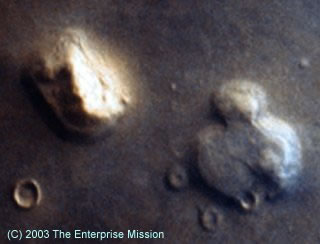
| Mars Cydonia Linked to Chaco Canyon , New Mexico Were the Ancient Ones of the Hopi from Mars or Did they Go To Mars from Earth Mary Sutherland - December 28, 2003 Mars Photos by The Enterprise Mission, Richard Hoagland |
The Face nor the Pyramids ,as most people are concentrated on ,did not fascinate me as much as the circular formations around these
remarkable landmarks . Although some would like for us to think they are craters to me the formations were too perfect to have been made as
the results of hits from a meteorite shower. I had to ask myself..why didn't these meteorites hit the landmarks next to the circular formations.
To my eye, the circular formations looked more man-made than nature designed. Notice also that the Mars photos and Chaco Canyon
photoes even show the same type of ridges around the circumference of the Kiva.
remarkable landmarks . Although some would like for us to think they are craters to me the formations were too perfect to have been made as
the results of hits from a meteorite shower. I had to ask myself..why didn't these meteorites hit the landmarks next to the circular formations.
To my eye, the circular formations looked more man-made than nature designed. Notice also that the Mars photos and Chaco Canyon
photoes even show the same type of ridges around the circumference of the Kiva.
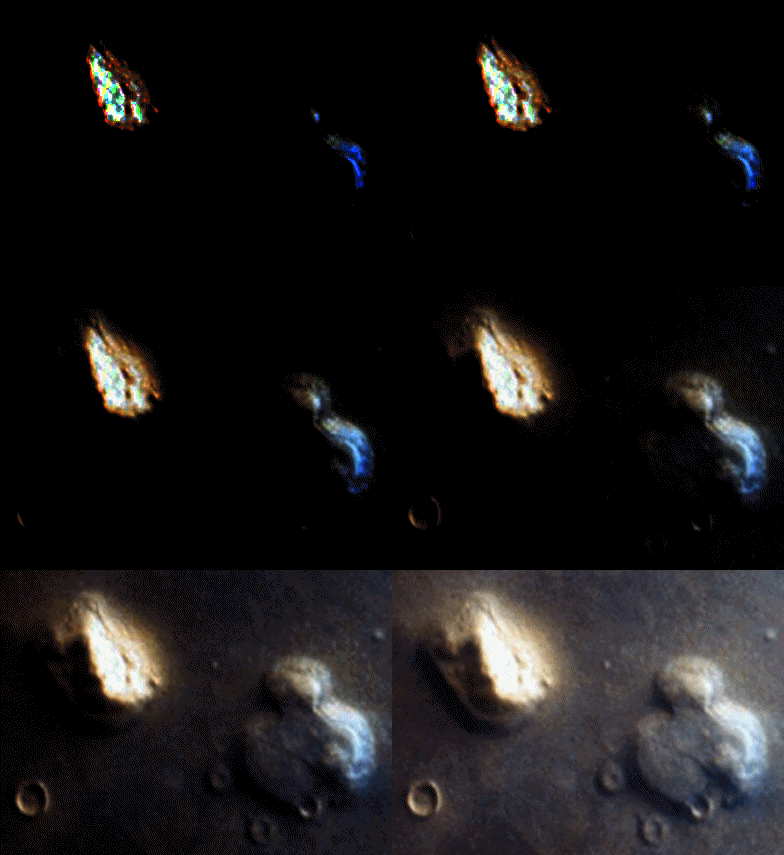
As you see with this picture I borrowed from Richard Hoagland's site The Enterprise Mission, we can assume that the
structures of the face and object to the above left, this area was used as a place of worship and study of the rising and
setting sun. Notice the automated picture to the right as to what happens to the face when the sun rises and hits onto the
object above the face,. The rays hit the object..then this is reflected onto the face which again can be seen from the
heavens above.
This is not a coincidence and definitely gives indication that they honored the heavens by using reflections of sun and
maybe later we will see that they also used reflections of the moon...yet to be discovered of course.
What we have here on Earth, as most knows is the similarities with the Great Pyramids of Giza and the Face of Cydonia...
BUT what does the desert area of Giza and the desert area of the Southwest USA have in common.. I believe another
ancient Martian Territory. Both Giza and Chaco Canyon were ancient observatories for the study and worship of the sun
and moon.
To demonstrate what I mean refer to the pictures again to the left. Just as the face lights up to shine up into the heavens
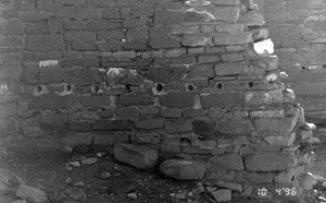
so do the man-built walls found in Chaco Canyon,
One monument is designed to capture the rising and setting sun and the other monument is designed to capture the
path of the Moon.
Given to the same method of operation of using monuments to capture the rays of the sun and sending a beacon of
sorts into the heavens..I would say that this may mean that they are of like minds and do share a common denominator
in religious practices...But that would not necessarily mean them to be the same people..
But if these circular objects on Mars are indeed the Kivas used by the Southwestern Indians then I feel we have a very
solid lead indicating that the People of Mars and the Ancients of The People of Chaco Valley are of the same lineage.
If my theory is correct we should be able to find out more about our Martian ancestors through the study of the people of
Chaco Valley.
And what does Pueblo Bonito Canyon indicate about an ancient race...Look at picture
structures of the face and object to the above left, this area was used as a place of worship and study of the rising and
setting sun. Notice the automated picture to the right as to what happens to the face when the sun rises and hits onto the
object above the face,. The rays hit the object..then this is reflected onto the face which again can be seen from the
heavens above.
This is not a coincidence and definitely gives indication that they honored the heavens by using reflections of sun and
maybe later we will see that they also used reflections of the moon...yet to be discovered of course.
What we have here on Earth, as most knows is the similarities with the Great Pyramids of Giza and the Face of Cydonia...
BUT what does the desert area of Giza and the desert area of the Southwest USA have in common.. I believe another
ancient Martian Territory. Both Giza and Chaco Canyon were ancient observatories for the study and worship of the sun
and moon.
To demonstrate what I mean refer to the pictures again to the left. Just as the face lights up to shine up into the heavens
so do the man-built walls found in Chaco Canyon,
One monument is designed to capture the rising and setting sun and the other monument is designed to capture the
path of the Moon.
Given to the same method of operation of using monuments to capture the rays of the sun and sending a beacon of
sorts into the heavens..I would say that this may mean that they are of like minds and do share a common denominator
in religious practices...But that would not necessarily mean them to be the same people..
But if these circular objects on Mars are indeed the Kivas used by the Southwestern Indians then I feel we have a very
solid lead indicating that the People of Mars and the Ancients of The People of Chaco Valley are of the same lineage.
If my theory is correct we should be able to find out more about our Martian ancestors through the study of the people of
Chaco Valley.
And what does Pueblo Bonito Canyon indicate about an ancient race...Look at picture

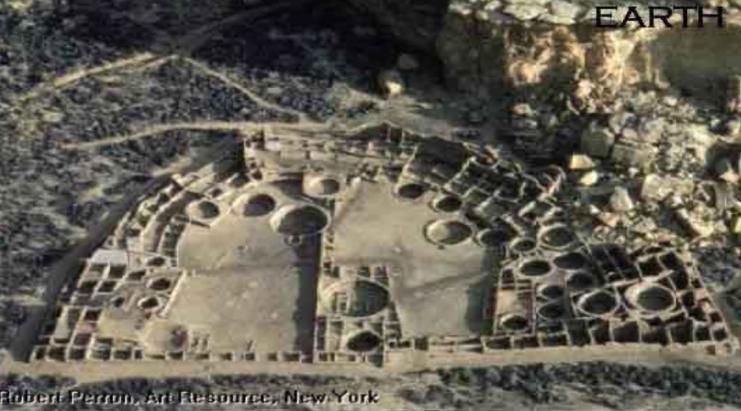
| Take notice of the kiva type formations and how they are located around the main structures |
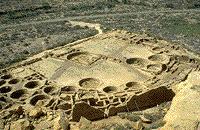
| Kivas in Pueblo Bonito, Chaco Canyon |
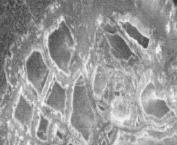
This is not the Cydonia Area that
shows the Kivas..but this area
does show again another type
of geometrical formations.This
is the Hydaspsis Chaos region
of Mars... a few miles from the
Hydroates Chaos Region of
Mars. It is an infrared close-up.
Bright areas are warmer, darker
areas are colder. North is right
in this image.
What's most striking initially is
the incredible consistency of the
"channels" between the "sand
covered mesas" The channels
all seem to be about the same
width, and remain incredibly
consistent for miles. The
mesas themselves are
shockingly geometric, not really
what one might expect from a
fluvial erosion process.
shows the Kivas..but this area
does show again another type
of geometrical formations.This
is the Hydaspsis Chaos region
of Mars... a few miles from the
Hydroates Chaos Region of
Mars. It is an infrared close-up.
Bright areas are warmer, darker
areas are colder. North is right
in this image.
What's most striking initially is
the incredible consistency of the
"channels" between the "sand
covered mesas" The channels
all seem to be about the same
width, and remain incredibly
consistent for miles. The
mesas themselves are
shockingly geometric, not really
what one might expect from a
fluvial erosion process.
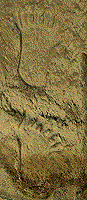
Behind Pueblo Bonito is a series
of petroglyphs depicting six-toed
feet , What these Petroglyphs
have to tell us may never be
known in its entirety because the
lower petroglyph has since been
covered with earth and can no
longer be viewed by park visitors.
Welcome to the world of
coverups in the archeological
world!
of petroglyphs depicting six-toed
feet , What these Petroglyphs
have to tell us may never be
known in its entirety because the
lower petroglyph has since been
covered with earth and can no
longer be viewed by park visitors.
Welcome to the world of
coverups in the archeological
world!
| Interesting Enough Also is that NASA has been doing Infrared Photo Imaging of this Area. Below is a copy of a NASA Website showing this evidence: NASA Archeological Research ghcc.msfc.nasa.gov/archeology/chaco. Chaco Canyon, New Mexico The Chaco Canyon Research Center had done aerial photography and a ground survey. This was the beginning of an archeological database, to which, we proposed to add thermal infrared multispectral data. If our sensors could locate prehistoric features, this would prove that using remote sensing technology could work for archeology. The Thermal Infrared Multispectral Scanner (TIMS) was flown by NASA over Chaco Canyon for the first time in spring of 1982. TIMS measures temperature differences near the ground, it has five meter resolution. Prehistoric roads from 900 or 1000 AD were detected. The roads could not be discerned by the naked eye from ground level. They also could not be seen in either aerial photography or color infrared photographs. Three more flights over Chaco detected over 200 miles of a prehistoric roadway system, as well as prehistoric walls, buildings, and agricultural fields. It may be that Chaco Canyon was a social and religious center. People were coming exchanging ideas, practicing ritualistic activities, such as breaking pottery, and then returning to whence they came. Why were the Chaco roads designed with exacting linearity, which surmounted any topographic obstruction, built to a width of 20 feet or more, and constructed by people who did not even employ beast of burden in their lives? The Chacoan roadway system was an impressive accomplishment that facilitated widespread movement and participation in religious activities. They connected the people along the periphery of the San Juan Basin and beyond to sacred places upon the landscape, to outlier sites, and ultimately to Chaco Canyon itself. Selected Papers "Analysis of Prehistoric Roadways in Chaco Canyon Using Remotely Sensed Digital Data," with D. Wagner. In C. Trombold's (Ed.) Ancient Road Networks and Settlement Hierarchies in the New World. Cambridge University Press, Cambridge, 1991. "Remote Sensing Applications in Archeological Research: Tracing Prehistoric Human Impact Upon the Environment," Doctoral Dissertation, University of Colorado. University Microfilms, Ann Arbor Michigan, 1990. Responsible Official: Dr. James E. Arnold (jim.arnold@msfc.nasa.gov) Page Author: Tom Sever Page Curator: Diane Samuelson (diane.samuelson@msfc.nasa.gov) Last Updated: May 12, 1998 |
The Ancients and Chaco
Canyon
Pueblo Indians, descendants
of the Chacoan people, regard
Chaco as a place where their
ancestors lived in a sacred
past. Pueblo leaders speak of
the significance of Chaco to the
Pueblo world today.
An archeological Organization
, Solstice Project, show us that
Chaco Canyon was not just a
primarily trade and
redistribution center as many
archeologists like to make
claims to. Rather it argues that
it was a center of astronomy
and cosmology and that a
primary purpose for the
construction of the elaborate
Chacoan buildings and certain
roads was to express
astronomical interests and to
be integral parts of a celestial
patterning.
While the Chacoans left no
written text to help us to
understand their culture, their
thoughts are preserved in the
language of their architecture,
roads and light markings.
Landscape, directions, sun
and moon, and movement of
shadow and light were the
materials used by the Chacoan
architects and builders to
express their knowledge of an
order in the universe. Thiis I
believe to be the same
ideology that the people of
Mars may have developed and
instilled in the people of the
Southwest. This same style of
preservation can be found in
the design of the Pyramids as
well, using sacred geometry
and astronomy to present an
indestructible means for
history to endure the Ages.
Again we can see a common
denominator between Mars,
Egypt and Chaco Canyon.
Canyon
Pueblo Indians, descendants
of the Chacoan people, regard
Chaco as a place where their
ancestors lived in a sacred
past. Pueblo leaders speak of
the significance of Chaco to the
Pueblo world today.
An archeological Organization
, Solstice Project, show us that
Chaco Canyon was not just a
primarily trade and
redistribution center as many
archeologists like to make
claims to. Rather it argues that
it was a center of astronomy
and cosmology and that a
primary purpose for the
construction of the elaborate
Chacoan buildings and certain
roads was to express
astronomical interests and to
be integral parts of a celestial
patterning.
While the Chacoans left no
written text to help us to
understand their culture, their
thoughts are preserved in the
language of their architecture,
roads and light markings.
Landscape, directions, sun
and moon, and movement of
shadow and light were the
materials used by the Chacoan
architects and builders to
express their knowledge of an
order in the universe. Thiis I
believe to be the same
ideology that the people of
Mars may have developed and
instilled in the people of the
Southwest. This same style of
preservation can be found in
the design of the Pyramids as
well, using sacred geometry
and astronomy to present an
indestructible means for
history to endure the Ages.
Again we can see a common
denominator between Mars,
Egypt and Chaco Canyon.
| Above photo shows how the reflections of the Sun Put Light on the Face of Mars. |
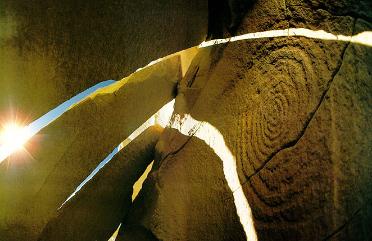
The Key to the Whole Mystery is in this Above Picture
Shown is the "Sun Dagger" by which the Chacoans (Anasazi)
were able to read the harvesting and planting seasons and
recorded time's passage. At the winter solstice, rays of sunlight
fell between the 2 huge stone slabs, neatly bracketing the spiral
petroglyph on 443 foot Fajada Butte at the south entrance to
Chaco Canyon. At the summer soltice, a single band of light
bisects the center of the spiral. The spring and fall equinoxes
were heralded by an additional light that fell on the smaller
petroglyph, visible to the left of the larger one. This discover was
made by Anna Sofaer in 1977.
After discovering this, We were able to see how the other
structures such as the great walls would light up with the rising
and setting sun or at another point with the light reflected off the
pathway of the moon.
Shown is the "Sun Dagger" by which the Chacoans (Anasazi)
were able to read the harvesting and planting seasons and
recorded time's passage. At the winter solstice, rays of sunlight
fell between the 2 huge stone slabs, neatly bracketing the spiral
petroglyph on 443 foot Fajada Butte at the south entrance to
Chaco Canyon. At the summer soltice, a single band of light
bisects the center of the spiral. The spring and fall equinoxes
were heralded by an additional light that fell on the smaller
petroglyph, visible to the left of the larger one. This discover was
made by Anna Sofaer in 1977.
After discovering this, We were able to see how the other
structures such as the great walls would light up with the rising
and setting sun or at another point with the light reflected off the
pathway of the moon.
| MARS Compare with Squared objects |
| MARS compare circular structures |
| ALALU: The deposed king of NIBIRU ,who escaped to Earth and discovered gold needed on NIBIRU to preserve their atmospere, Alalu's image is reported to be carved on a rock on Mars, which is believed to be also his tomb. |
| The Vertex, called a point of fateful encounters over which we have no conscious control, is the intersection of the great circles of the ecliptic... In the Draconic Chart the ecliptic plane of the Sun, the equatorial=20 plane of the Earth, and that of the Lunar orbit are all brought together....= Light paths meet Earth. Hmmmm For the Earth (as a whole), this would be in Earth=August of 1999! Chaco Canyon monitors the path of the sun and moon and has a point of crossing for the sun and moon. |

| Great news from Rome today and Richard Hoagland on my Kiva/Chaco Canyon and Mars theory. I would like to share this email I received from Paola Harris with you. -------------- Dear Mary so I went straight to the expert as I always do and here is his answer to Mars Connection! Happy New year Paola From:Richard Hoagland >To: Paola Harris <paolaharris@h...> >Subject: Re: FW: [UFOFacts] Mars-Earth Connection Sent to Me But >Interesting Connection! >Date: Wed, 31 Dec 2003 20:09:18 -0800 (PST) > Dear P, Happy New Year!!! Oh, tell your friend Mary that she's on to something. :) Greetings >Richard |
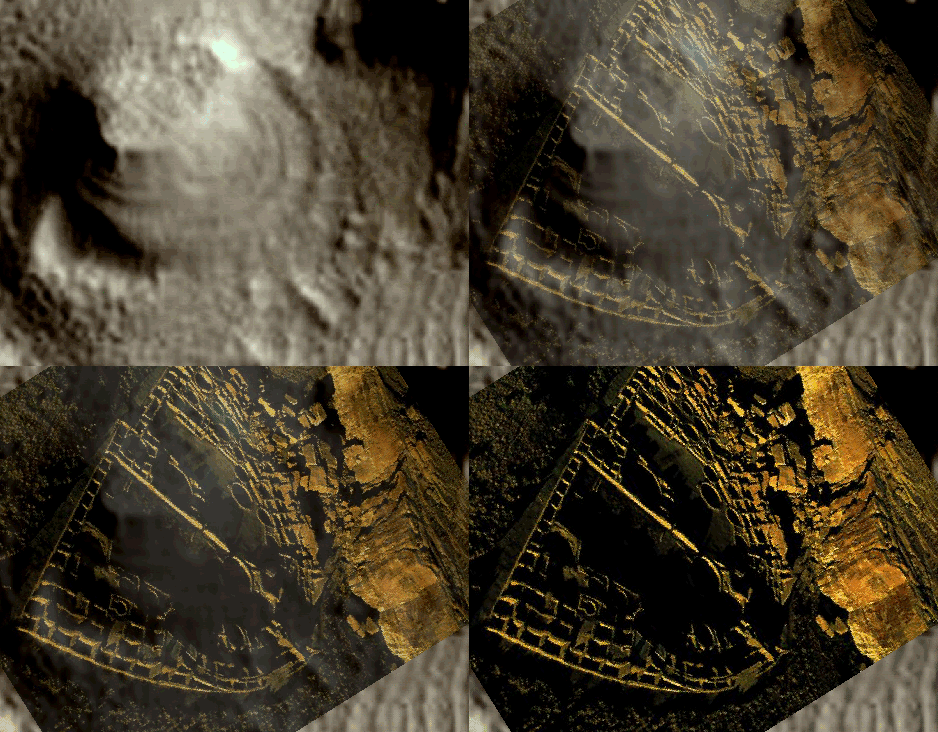
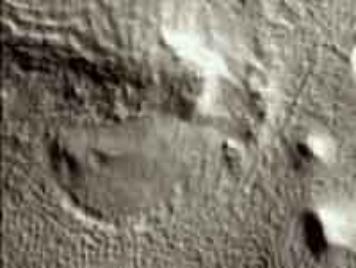
Above Picture is of Pueblo Bonito , Chaco Canyon ..Below is another
arerial shot..but of MARS. Notice again the similarities.
arerial shot..but of MARS. Notice again the similarities.
| Chaco Canyon , despite long acclaimed status as a major trade center by archeologists, was to discovered later by Ann Sofaer, not to be trade center at all BUT was a center of astronomy and cosmology and that a primary purpose for the construction of the elaborate Chacoan buildings and certain roads was to express astronomical interests and to be integral parts of a celestial patterning. While the Chacoans, or as they were remembered...'The Ancient Ones' left no written text to help us to understand their culture, their thoughts are preserved in the language of their architecture, roads and light markings. Landscape, directions, sun and moon, and movement of shadow and light were the materials used by the Chacoan architects and builders to express their knowledge of an order in the universe.. Ann Sofaer, president of the Solstice Project, at the summer solstice in 1977, discovered the Sun Dagger (see at top of page) on top of Fajada Butte in New Mexico's Chaco Canyon. The calendar marks, with PRECISE light patterns, the summer and winter solstices, the spring and fall equinoxes, AND the nineteen year cycle of the moon. recent discoveries strongly indicate that not only was the dagger a calendar, but the whole place may be a calendar. On a recently aired documentary, several archaeologists and other scientists pointed out many, many examples of how the ruins themselves were aligned in a specific way, so as to line of with the arc of the sun and moon on key dates, at important times of year. |

| The Supernova Pictograph - In AD 1054 a new star appeared in the constellation Taurus, so bright it was visible even by day. Today we know this object as the Crab Nebula, the remnants of a supernova of a massive star. The Chinese recorded this event at the time of its appearance, and many archaeologists believe that the Anasazi did so as well, with this set of pictographs located along the trail to Penasco Blanco ruin. The crescent shape accurately represents the phase of the moon at the time of the explosion, while the star shape is thought to represent the supernova itself. The significance of the handprint at this time is unknown. |


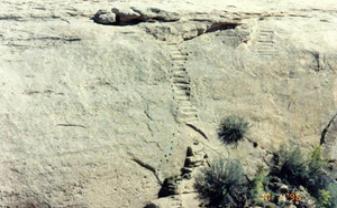
| Looking down on the marvelous Pueblo Bonito ruin, from the lip of the canyon above. (This is the centerpiece ruin, covering around 3 acres, the size of the Roman Coliseum; the intersection of the north-south axis part of their solar calendar: when it existed it is thought to have been around 700 rooms; 3-4 stories high.) Picture to on Top Right is of Pueblo Bonita Bottom is of Chaco Canyon Photos by Gary Gordon Would Mars Also Look Similar to this if we were able to see its surface |
| Connection to the First Civilizations of Sumerian and Mayan through the Name Laguna Sumerian=Lagash Mayan=Laguna Ruins testify of the civil war. Homes burned, charred corn with the kernels intact, charred skulls and human bones. The disorders covered a wide range geographically from the Mogollons to Utah. The war evidently preceded the migration of the Chacoans and immediately followed the McCarty volcano eruption. The causes of the civil war are entirely open to speculation, as is the destination of the migration. Zuni legends suggest they went south . Lagunas believe their ancestors went south and they are the sole survivors of the tribe, the young, the sick, those unable to make the long trek south. Another Coincidence? Number 12 Is it a coincidence that the mathematical system of both ancient Sumerian and Egypt was based on 12, when here we meet beings with 12 fingers? We find twelve-toed footprints on Anasazi petroglyphs in the Canyon lands of Utah, and a twelve-fingered Sky Kachina in the tradition of the Laguna, Hopi and other Pueblo Indians. The Brazilian Ugha Mongulala believe their Ancient Fathers, who came from the stars, had six fingers and six toes as signs of their divine origin |
| Ambruster, C. W. and T. Hull (Villanova University) A New Navajo Winter Solstice Sunrise Site in Chaco Canyon There exists a wide variety of ways in which astronomical alignments in the Ameri can Southwest have been expressed, largely reflecting different properties and ge ometries of both buildings and the natural environment. We report on our document ation of an evocative Navajo winter solstice sunrise site in Chaco Canyon, in whi ch the slanted ridge of a large, foreground, rock art-covered boulder rises at th e same angle as the rising winter solstice sun at this latitude. The Sun initiall y rises in a 'V', defined on the left by the base of a cliff about 2 km distant ( the dominant southeastern horizon feature), and defined on the right by the rock art-covered foreground boulder. The Sun then, on a timescale of an hour, marches up the slanted ridge of the boulder to its peak. If the boulder was displaced onl y a few meters north or south, the precision of the alignment with the distant cl iff would be lost. The observer's eyepoint is also tightly constrained. Incised N avajo rock art on the boulder includes two shields with masks, and several groups of drilled holes which are possibly constellations, as well as at least one Yei figure. The rock art on this panel was sketched by the Simpson Military Reconnais sance Expedition in 1849. Current sketches are compared to the original. |
| Putting the Pieces Together Who Were the Chacoans? Could Another Civilization have existed before them....Or Are they the People of the Flying Saucers? Here is a story that I had on one of my other sites that I felt we could use as a piece of the Puzzle . 'TRIBAL MEMORIES OF THE FLYING SAUCERS' BY OGA-MAKE (The author of this story is a Navaho Indian. He tells us this tribal secret of the Paiutes in appreciation for the story of the Navaho which appeared in the Spring, 1948 issue of FATE magazine). "Most of you who read this are probably white men of a blood only a century or two out of Europe. You speak in your papers of the Flying Saucers or Mystery Ships as something new, and strangely typical of the twentieth century. How could you but think otherwise? Yet if you had red skin, and were of a blood which had been born and bred of the land for untold thousands ofyears, you would know this is not true. You would know that your ancestors living in these mountains and upon these prairies for numberless generations, had seen these ships before, and had passed down the story in the legends which are the unwritten history of your people. You do not believe? Well, after all, why should you? But knowing your scornful unbelief, the storytellers of my people have closed their lips in bitterness against the outward flow of this knowledge. "Yet, I have said to the storytellers this: now that the ships are being seen again, is it wise that we, the elder race, keep our knowledge to ourselves? Thus for me, an American Indian, some of the sages among my people have talked, and if you care to, I shall permit you to sit down with us and listen. "Let us say that it is dusk in that strange place which you, the white-man, calls "Death Valley." I have passed tobacco...to the aged chief of the Paiutes who sits across a tiny fire from me and sprinkles corn meal upon the flames... "The old chief looked like a wrinkled mummy as he sat there puffing upon his pipe. Yet his eyes were not those of the unseeing, but eyes which seemed to look back on long trails of time. His people had held the Inyo, Panamint and Death Valleys for untold centuries before the coming of the white-man. Now we sat in the valley which white-man named for Death, but which the Paiute calls Tomesha--The Flaming Land. Here before me as I faced eastward, the Funerals (mountains forming Death Valley's eastern wall) were wrapped in purple-blue blankets about their feet while their faces were painted in scarlet. Behind me, the Panamints rose like a mile-high wall, dark against the sinking sun. "The old Paiute smoked my tobacco for a long time before he reverently blew the smoke to the four directions. Finally he spoke. "'You ask me if we heard of the great silver airships in the days before white-man brought his wagon trains into the land?' "'Yes grandfather, I come seeking knowledge.' (Among all tribes of my people, grandfather is the term of greatest respect which one man can pay to another.) "'We, the Paiute Nation, have known of these ships for untold generations. We also believe that we know something of the people who fly them. They are called The Hav-musuvs.' "'Who are the Hav-musuvs?' "'They are a people of the Panamints, and they are as ancient as Tomesha itself.' "He smiled a little at my confusion. "'You do not understand? Of course not. You are not a Paiute. Then listen closely and I will lead you back along the trail of the dim past. 'When the world was young, and this valley which is now dry, parched desert, was a lush, hidden harbor of a blue water-sea which stretched from half way up those mountains to the Gulf of California, it is said that the Hav-musuvs came here in huge rowing-ships. They found great caverns in the Panamints, and in them they built one of their cities. At that time California was the island which the Indians of that state told the Spanish it was, and which they marked so on their maps. Living in their hidden city, the Hav-musuvs ruled the sea with their fast rowing-ships, trading with far-away peoples and bringing strange goods to the great quays said still to exist in the caverns. Then as untold centuries rolled past, the climate began to change. The water in the lake went down until there was no longer a way to the sea. First the way was broken only by the southern mountains, over the tops of which goods could be carried. But as time went by, the water continued to shrink, until the day came when only a dry crust was all that remained of the great blue lake. Then the desert came, and the Fire-God began to walk across Tomesha, The Flaming-Land. 'When the Hav-musuvs could no longer use their great rowing-ships, they began to think of other means to reach the world beyond. I suppose that is how it happened. We know that they began to use flying canoes. At first they were not large,these silvery ships with wings. They moved with a slight whirring sound, and a dipping movement, like an eagle. The passing centuries brought other changes. Tribe after tribe swept across the land, fighting to possess it for awhile and passing like the storm of sand. In their mountain city still in the caverns, the Hav-musuvs dwelt in peace, far removed from the conflict. Sometimes they were seen in the distance, in their flying ships or riding on the snowy-white animals which took them from ledge to ledge up the cliff. We have never seen these strange animals at any other place. To these people the passing centuries brought only larger and larger ships, moving always more silently." "'Have you ever seen a Hav-musuv?" "'No, but we have many stories of them. There are reasons why one does not become too curious.' "'Reasons?' "'Yes. These strange people have weapons. One is a small tube which stuns one with a prickly feeling like a rain of cactus needles. One cannot move for hours, and during this time the mysterious ones vanish up the cliffs. The other weapon is deadly. It is a long, silvery tube. When this is pointed at you, death follows immediately.' "'But tell me about these people. What do they look like and how do they dress?' "'They are a beautiful people. Their skin is a golden tint, and a head band holds back their long dark hair. They dress always in a white fine-spun garment which wraps around them and is draped upon one shoulder. Pale sandals are worn upon theirfeet...' "His voice trailed away in a puff of smoke. The purple shadows rising up the walls of the Funerals splashed like the waves of the ghost lake. The old man seemed to have fallen into a sort of trance, but I had one more question. "'Has any Paiute ever spoken to a Hav-musuv, or were the Paiutes here when the great rowing-ships first appeared?' For some moments I wondered if he had heard me. Yet as is our custom, I waited patiently for the answer. Again he went through the ritual of the smoke-breathing to the four directions, and then his soft voice continued: "'Yes. Once in the not-so-distant-past, but yet many generations before the coming of the Spanish, a Paiute chief lost his bride by sudden death. In his great and overwhelming grief, he thought of the Hav-musuvs and their long tube-of-death. He wished to join her, so he bid farewell to his sorrowing people and set off to find the Hav-musuvs. None appeared until the chief began to climb the almost unscaleable Panamints. Then one of the men in white appeared suddenly before him with the long tube, and motioned him back. The chief made signs that he wished to die, and came on. The man in white made a long singing whistle and other Hav-musuvs appeared. They spoke together in a strange tongue and then regarded the chief thoughtfully. Finally they made signs to him making him understand that they would take him with them. Many weeks after his people had mourned him for dead, the Paiute chief came back to his camp. He had been in the giant underground valley of the Hav-musuvs, he said, where white lights which burn night and day and never go out, or need any fuel, lit an ancient city of marble beauty. There he learned the language and the history of the mysterious people, giving them in turn the language and legends of the Paiutes. He said that he would have liked to remain there forever in the peace and beauty of their life, but they bade him return and use his new knowledge for his people. " "I could not help but ask the inevitable. "'Do you believe this story of the chief?' His eyes studied the wisps of smoke for some minutes before he answered. "'I do not know. When a man is lost in Tomesha, and the Fire-God is walking across the salt crust, strange dreams like clouds, fog through his mind. No man can breathe the hot breath of the Fire-God and long remain sane. Of course, the Paiutes have thought of this. No people knows the moods of Tomesha better than they. You asked me to tell you the legend of the flying ships. I have told you what the young men of the tribe do not know, for they no longer listen to the stories of the past. Now you ask me if I believe. I answer this. Turn around. Look behind you at that wall of the Panamints. How many giant caverns could open there, being hidden by the lights and shadows of the rocks? How many could open outward or inward and never be seen behind the arrow-like pinnacles before them? How many ships could swoop down like an eagle from the beyond, on summer nights when the fires of the furnace-sands have closed away the valley from the eyes of the white-man? How many Hav-musuvs could live in their eternal peace away from the noise of white-man's guns in their unscaleable stronghold? This has always been a land of mystery. Nothing can change that. Not even white-man with his flying engines, for should they come too close to the wall of the Panamints a sharp wind like the flying arrow can sheer off a wing. Tomesha hides its secrets well even in winter, but no man can pry into them when the Fire-God draws the hot veil of his breath across the passes. I must still answer your question with my mind in doubt, for we speak of a weird land. White-man does not yet know it as well as the Paiutes, and we have ever held it in awe. It is still the forbidden 'Tomesha--Land-Of-The-Flaming-Earth.'" The story of the Hav-musuvs just given seems to be a major "piece" of the overall UFO-Subsurface puzzle. Indeed it is a major confirmation of the theory which has been growing in acceptance in recent times that an extraterrestrial-Subterranean connection exists. Many of the early UFO "contactees" of the 1950's and '60's in fact, describing their own alleged encounters with 'benevolent' human-like beings, had their experiences not far from the Panamint range, particularly within the Mojave Desert. Is it any coincidence that many other accounts concerning "spacefaring" sub-terran human societies exist within this same state of California, especially around Mt. Shasta? The very name of the subterranean city allegedly lying a mile-or-so below Mt. Shasta - Telos (the Greek word for "uttermost"), seems to be a confirmation as well, if in fact the Hav-Musuvs were an ancient Greek colony. This would also be true with the many other Telosian-connected societies allegedly existing below the surface of North America, beneath the Tetons, the Wasatch Range, within the mountains surrounding Prescott, Arizona and elsewhere. We already know that the ancient Greeks were a very intellectual society, and that artifacts such as the Antikythera "computer" suggest this as well. There are other corroborative accounts taken from ancient Hindu scripts, which we will quote shortly, which state that the ancient Greeks had actually developed flying ships thousands of years ago. Is it possible that the Hav-musuvs (which we suspect to be a neo-Grecian race because of their dress and marble-like cities) would have taken the next logical step after developing aerial travel: that is, attempt to land one or more of their kind on the Moon... eventually upon Mars... and possibly even later upon a planet in a nearby star system? The United States as we've said made incredible advances in this area in a period of less than 100 years, thanks to the phenomena known as the technological curve (i.e. that a synchronous effort on the part of many contributing factors eventually leads to a multiplying explosion in technology). If America landed a man on the moon only 70 years after the Wright Brothers opened the skies to aerial travel, then can we expect anything less from the Hav- musuvs or others like them? For instance technology in our society is becoming 1000's of times more sophisticated every year. Is it possible that the ancient Greeks or a similar ancient society had a "technology explosion" thousands of years ago? If so, then it might have been possible for them to establish bases or colonies on the Moon, Mars, and perhaps beyond! One "contactee", incidentally, has stated that a large "space port" exists in a network of caverns deep below present-day Death Valley. THE MARS AND CHACO CANYON CONNECTION CONTINUED |
| Night time MARS image of Hydaspis Chaos, above, not far from Hydraotes Chaos. Taken with Mars Orbiter infrared camera ((Courtesy NASA/ASU/THEMIS) These structures are radiating heat in the infrared spectrum. Are they still being inhabited??? For Larger Photo Click Here |
MARS LINKS Created by
Mary Sutherland
Kivas
Kivas 2
Spirit Mars
Spirit Mars 2
Spirit Mars 3
Spirit Mars 4
Spirit Mars 5
Spirit Mars 6
Spirit Mars 7
Spirit Mars 8
Spirit Mars 9
Spirit Mars 10
Spirit Mars 11
Spirit Mars 12
Spirit Mars 13
Spirit Mars 14
Spirit Mars 15
Spirit Mars 16 - Mars Update
Spirit Mars 17 - Mars Fossils
Spirit Mars 18 - Mars from
Wisconsin
Spirit Mars 19 - Mars from
Wisconsin
Spirit Mars 20 - Mars from
Wisconsin
Spirit Mars 21 - Mars from
Wisconsin
Spirit Mars 22 - Mars from
Wisconsin
Spirit Mars 23 - Mars from
Wisconsin
MARS Exploration and
Coverups
Cydonia Decoded
Mars Explorations
Mars Images
Mary Sutherland
Kivas
Kivas 2
Spirit Mars
Spirit Mars 2
Spirit Mars 3
Spirit Mars 4
Spirit Mars 5
Spirit Mars 6
Spirit Mars 7
Spirit Mars 8
Spirit Mars 9
Spirit Mars 10
Spirit Mars 11
Spirit Mars 12
Spirit Mars 13
Spirit Mars 14
Spirit Mars 15
Spirit Mars 16 - Mars Update
Spirit Mars 17 - Mars Fossils
Spirit Mars 18 - Mars from
Wisconsin
Spirit Mars 19 - Mars from
Wisconsin
Spirit Mars 20 - Mars from
Wisconsin
Spirit Mars 21 - Mars from
Wisconsin
Spirit Mars 22 - Mars from
Wisconsin
Spirit Mars 23 - Mars from
Wisconsin
MARS Exploration and
Coverups
Cydonia Decoded
Mars Explorations
Mars Images
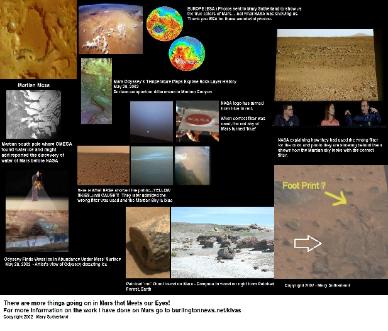
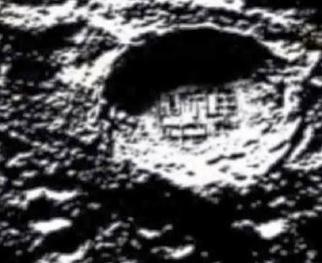
| This is a photo taken of the inside of a 'kiva' on the Moon. This I believe is exactly what the 'kivas' of Mars would look like as well. Circular Kiva with a city built inside, with tunnels leading to underground tunnel and cities. |
| Inter-dimensional Photos Taken in the Haunted Woods of Burlngton, Wisconsin Burlngton Tours - Brad and Mary Sutherland Click Here for More information on Tours |
| Chaco Canyon and the Mars Connection by Mary Sutherland Exploring the Unknown with Mary Sutherland |
| Brad and Mary Sutherland 248 Carver Street Winslow, Illinois 61089 815 367 1006 |

| Allow me to Introduce Myself .... Click Here |

| Portals...Gateways to the Multi-Dimensional Worlds 19.99 120 pages Full Color Portals- Gateways to the Multi-Dimensional Worlds Believe in the Magic Series In reading my book, ‘Portals- Gateways to the Multi-Dimensional Worlds’ and my series ‘Believe in the Magic’, I assure you, that you will not be disappointed. Quite the opposite; this book and upcoming series offer to the reader a unique understanding of ‘All that Is!’ Spread throughout its pages, are photos my husband Brad and I have taken through the years of the invisible worlds, filled with multiple selves, faeries, trolls, UFOs, angels and more. |


